


Comprehensive vs. Collision: What’s the Difference?
Comprehensive vs. Collision: What’s the Difference?
If you have comprehensive and collision coverage on your auto insurance policy, you may know that both can help pay for damage to your vehicle.
But what’s the difference between them?
With wet roads, fallen leaves, windstorms, and slippery driving conditions in Washington, this is a good time to understand what those two coverages are actually designed to do.
Here’s the simple way I explain it:
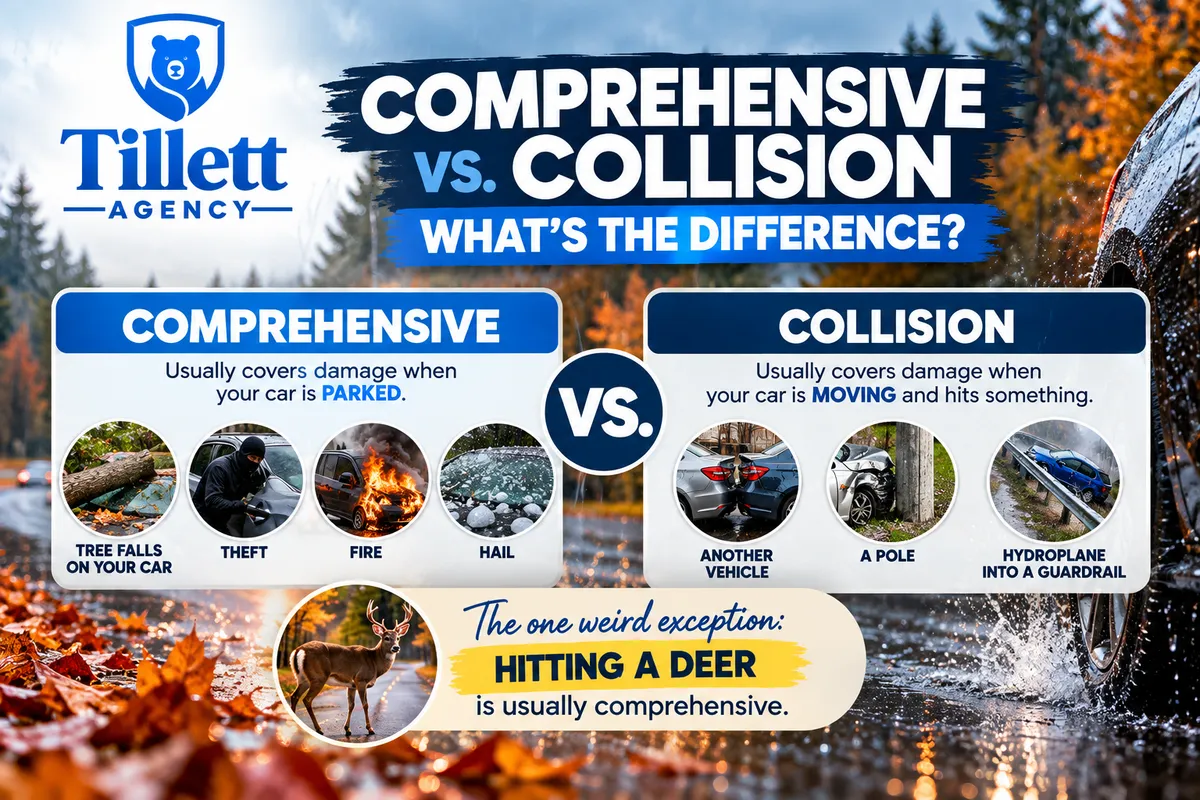
Parked = usually comprehensive.
Moving and collides with something = usually collision.
That's not a rule that works for every possible claim, but it's an easy starting point for understanding the difference.
What Does Comprehensive Insurance Cover?
Comprehensive coverage generally helps with physical damage to your vehicle caused by something other than a collision with another vehicle or object.
Common examples can include:
Theft
Fire
Hail
Falling objects, such as a tree or branch
Vandalism
Certain animal-related losses
For example, imagine your car is sitting in your driveway during a Washington windstorm and a tree falls on it. That's the type of loss that would generally fall under comprehensive coverage.
What Does Collision Insurance Cover?
Collision coverage generally helps pay for damage to your vehicle when it collides with another vehicle or object.
Examples can include:
Hitting another vehicle
Hitting a pole
Hitting a guardrail
Damage from certain single-vehicle accidents
Here's a very Washington example: you're driving on a wet road, lose control, and hydroplane into a guardrail.
That would generally fall under collision coverage.
What Happens If I Hit a Deer?
This is the example that throws people off.
You're driving. Your car hits something. So it sounds like collision coverage, right?
Generally, hitting a deer or another animal falls under comprehensive coverage rather than collision.
That's why "parked versus moving" is a helpful way to remember the basic difference—but it isn't a substitute for understanding how your actual policy responds.
Do I Need Both Comprehensive and Collision?
Comprehensive and collision are separate coverages, and whether you carry one or both depends on your policy and situation.
If you finance or lease your vehicle, your lender or leasing company may require physical damage coverage.
If you own the vehicle outright, the decision often comes down to questions such as the value of your vehicle, your deductibles, what the coverage costs, and how financially difficult it would be for you to repair or replace the vehicle yourself after a loss.
This is where I don't like one-size-fits-all insurance advice.
The right question isn't simply, "Do I need full coverage?"
It's:
"What risks am I trying to protect myself from, and what would happen financially if my car were damaged tomorrow?"
Know What You Have Before You Need It
Insurance terminology can make something fairly simple sound complicated.
You don't need to memorize every possible claim scenario.
Start by understanding what your comprehensive and collision coverage are designed to protect against, what deductibles you've selected, and whether those coverages are actually included on your current policy.
Because the worst time to learn what's on your insurance policy is after something has already happened.
If you're anywhere in Washington and aren't sure what your current auto policy covers, call, text, email, or DM me. I'll help you understand what you have and where you may have gaps before you ever need to use it.
The Tillett Agency
1818 Main St Ste D
Sumner, WA 98390
📞 360.893.7513
✉️ [email protected]
Coverage varies by carrier, policy, endorsements, deductibles, exclusions, and the circumstances of a loss. Refer to your individual policy for specific coverage.
